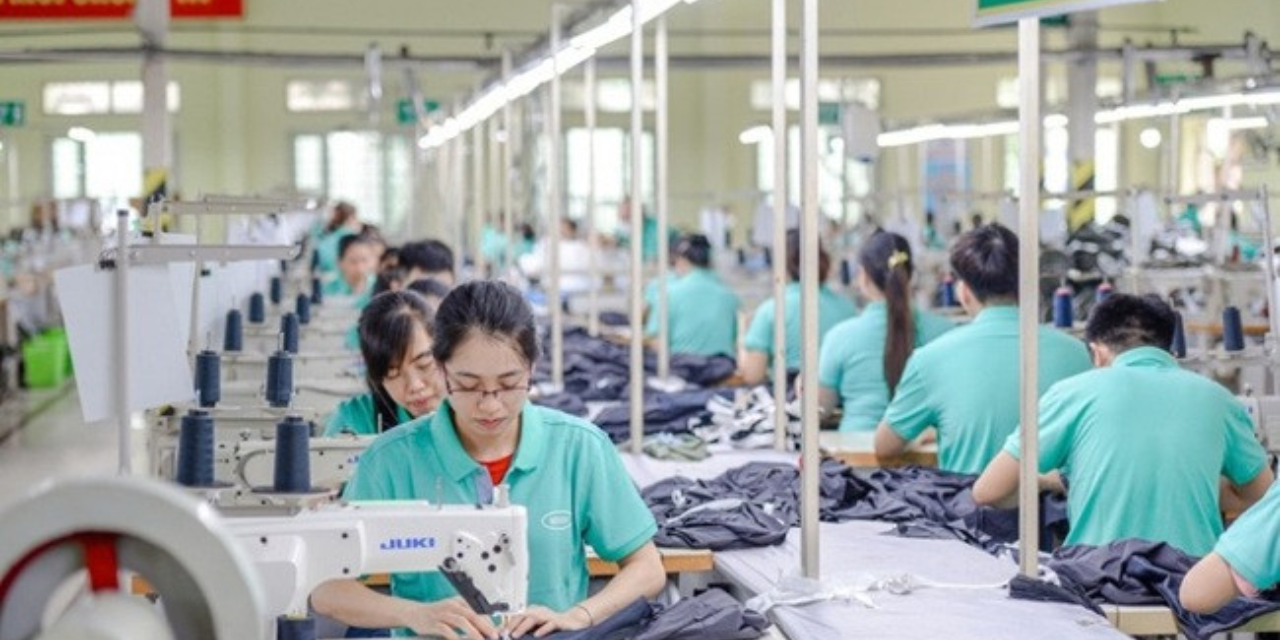
Vietnam's textile and garment industry recorded steady export growth in 2026, but its continued dependence on imported fabrics is highlighting major gaps in the country's domestic textile supply chain.
According to Vietnam News Agency (VNA), textile and garment exports reached US$39.84 billion during January–October 2026, registering a 3.9% year-on-year increase. Exports in October alone stood at US$4.08 billion, up 9.8% compared with the same month last year. The industry is targeting total exports of US$48–49 billion for 2026.
However, fabric imports remain a significant challenge. Vietnam imported fabrics worth US$12.87 billion during the first ten months of 2026, reflecting its continued reliance on overseas suppliers.
Domestic Fabric Production Remains Limited
According to Vietnam's Ministry of Industry and Trade, domestic production meets approximately 50% of the industry's demand for materials and accessories, while local fabric manufacturing covers only 36% of total demand.
This dependence creates challenges for manufacturers seeking to benefit from preferential tariffs under Vietnam's 17 Free Trade Agreements (FTAs), which cover nearly 70 trading partners.
FTA Rules of Origin Create Challenges
Under the Comprehensive and Progressive Agreement for Trans-Pacific Partnership (CPTPP), the yarn-forward rule requires key production stages, including yarn spinning, fabric manufacturing and garment production, to take place within member economies to qualify for preferential tariffs.
Although Vietnam's textile and garment exports to CPTPP markets increased from US$6.27 billion in 2018 to US$8.3 billion in 2025, less than 10% of exports reportedly utilise preferential CPTPP certificates of origin.
Similar challenges exist under the UK-Vietnam Free Trade Agreement (UKVFTA), which generally requires fabric production and garment manufacturing to take place in Vietnam or the UK to qualify for preferential tariff benefits.
Focus Shifts Towards Domestic Manufacturing
The Vietnam National Textile and Garment Group (Vinatex) has identified investments in fabric production, automation, advanced technology and digital management as key priorities.
The industry is also looking to move beyond the traditional Cut-Make-Trim (CMT) model towards Free on Board (FOB) and Original Design Manufacturing (ODM), enabling manufacturers to capture greater value across the supply chain.
Vietnam's next growth phase will depend not only on increasing garment exports but also on strengthening domestic fabric production, improving supply-chain integration and meeting international rules of origin to maximise the benefits of its trade agreements.


No comments yet. Be the first to share your thoughts!