
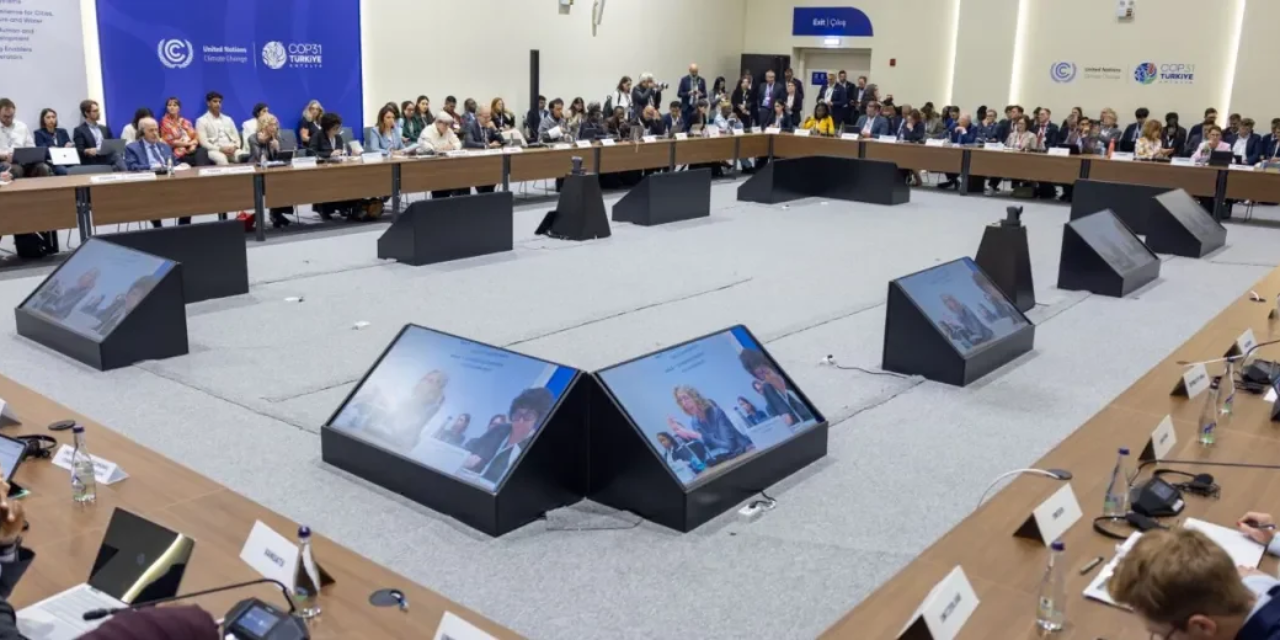
The United Nations Environment Programme (UNEP) has called for stronger global cooperation to address rising temperatures and accelerate the adoption of sustainable cooling solutions, highlighting the urgent need to integrate heat resilience into climate and development strategies.
Speaking at the third Annual Cooling Ministerial during COP31, UNEP emphasised that extreme heat is increasingly affecting public health, industrial productivity, infrastructure, energy security and economic stability.
According to UNEP, nearly two billion people worldwide lack access to adequate cooling. Cooling already accounts for approximately 20% of global electricity consumption, with demand expected to rise significantly in the coming years. Without sustainable alternatives, increasing cooling requirements could place additional pressure on electricity networks and increase greenhouse gas emissions.
Global Roadmap to Address Extreme Heat
UNEP has called for the development of a Heat Resilience and Sustainable Cooling Roadmap to help countries coordinate policies, investments and implementation strategies.
The proposed roadmap aims to bring together governments, industries, financial institutions and development partners under a common framework. It will focus on identifying major heat risks, prioritising solutions and connecting existing climate commitments with practical investments.
Sustainable Cooling Solutions Can Reduce Emissions
UNEP highlighted several solutions that can improve cooling efficiency while reducing environmental impacts, including:
Passive and nature-based cooling systems.
Energy-efficient air conditioning and ventilation.
Hybrid cooling solutions combining fans and air conditioning.
Efficient refrigeration and cold-chain infrastructure.
District cooling systems.
Climate-friendly refrigerants under the Kigali Amendment.
According to UNEP, implementing sustainable cooling solutions could deliver nearly two-thirds of available emissions reductions from the cooling sector, protect an additional 3.5 billion people from heat-related risks by 2050 and save approximately $1 trillion annually in consumer costs by the same year.
Global Partnerships and Industry Participation
The Global Cooling Pledge and Cool Coalition have helped strengthen international cooperation, bringing together governments, manufacturers, cities, financial institutions and development organisations.
More than 55 National Cooling Action Plans are being developed or implemented, while cooling has been incorporated into nearly 60 Nationally Determined Contributions (NDCs).
UNEP also highlighted the launch of a Manufacturing Platform to encourage collaboration between governments, manufacturers and buyers to expand the availability of energy-efficient cooling equipment using refrigerants with low and ultra-low global warming potential.
Sustainable Cooling Becomes a Climate Priority
UNEP urged governments to support the Antalya-to-Addis Heat Resilience and Sustainable Cooling Declaration and integrate sustainable cooling into national climate strategies and the implementation of the Paris Agreement.
The initiative aims to advance three major outcomes: thermal safety for people, heat-resilient systems and climate-compatible development.
The growing focus on sustainable cooling also creates opportunities for manufacturers, technology providers and industries to develop energy-efficient equipment, environmentally friendly materials and innovative cooling solutions.
As global temperatures continue to rise, UNEP emphasises that sustainable cooling must become a central part of climate action, economic development and public resilience.


No comments yet. Be the first to share your thoughts!