
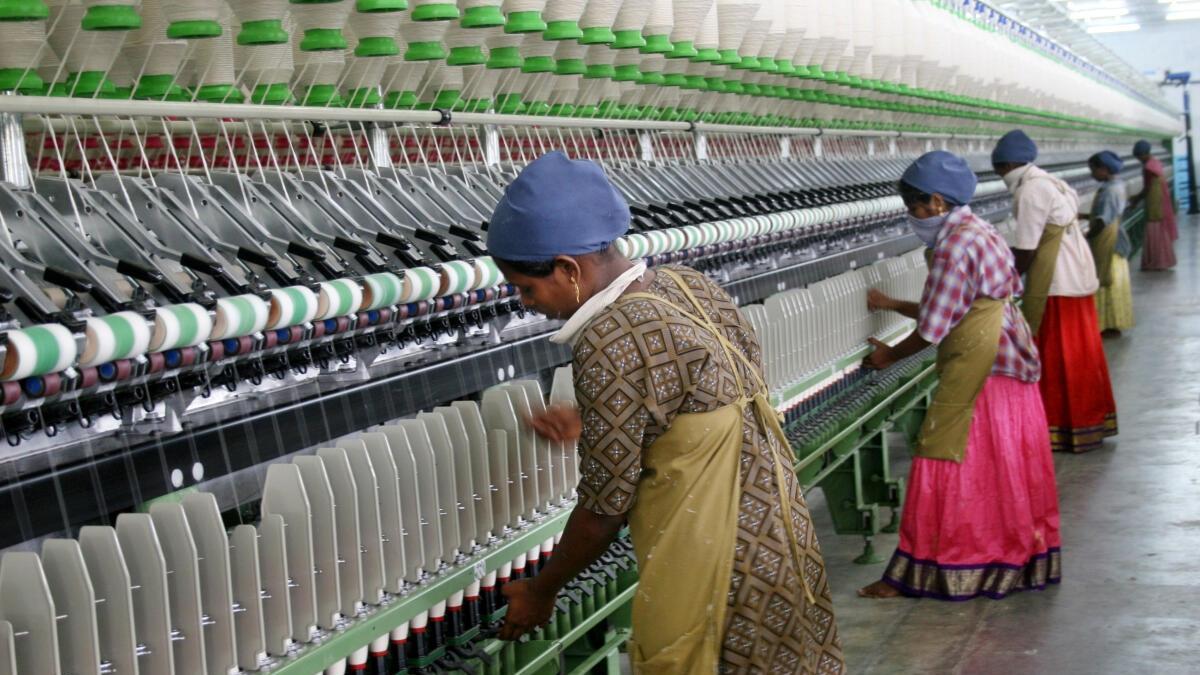
The Tamil Nadu State Commission for Women has called for stronger workplace safeguards for women workers in Tiruppur textile industries.
The Commission recommended regular awareness programmes on grievance redressal through Internal Complaints Committees (ICCs). These committees are required under the Sexual Harassment of Women at Workplace Act, 2013, also known as the POSH Act.
Limited awareness among workers
The Commission found limited awareness about ICCs during a recent inspection of textile units in Tiruppur district. It also noted that some establishments had not clearly displayed details of ICC members.
Commission Chairperson A.S. Kumari said that forming an ICC alone is not enough. The committee must also function effectively and meet statutory requirements.
Concerns over adolescent workers
The Commission also found workers aged 15 to 17 in some establishments. Management representatives said their employment was permitted under applicable child and adolescent labour laws. They also provided age verification and medical fitness records.
However, the Commission raised concerns about adolescents working in industrial settings. Such workplaces may involve machinery, dust, heat and other occupational risks.
The Commission suggested measures to gradually reduce and eventually eliminate adolescent labour in factories and mills.
Focus on labour welfare
The Commission also asked the Tiruppur district administration to ensure payment of wages for weekly rest days as required under applicable labour provisions.
The inspection covered seven textile and garment manufacturing units. It examined workplace safety, minimum wages, labour rights, forced labour indicators and sexual harassment prevention.
The team also reviewed migrant worker welfare and the working conditions of women workers.
The Commission said most workers, especially women migrant workers, were from Odisha. It found no evidence of forced or bonded labour.
Wages were paid through bank transfers, with Provident Fund listed as the permissible deduction. The report said an average wage of around ₹500 per day was prevalent for an eight-hour shift.
The Commission has asked the district administration to submit an Action Taken Report within nine weeks.


No comments yet. Be the first to share your thoughts!