
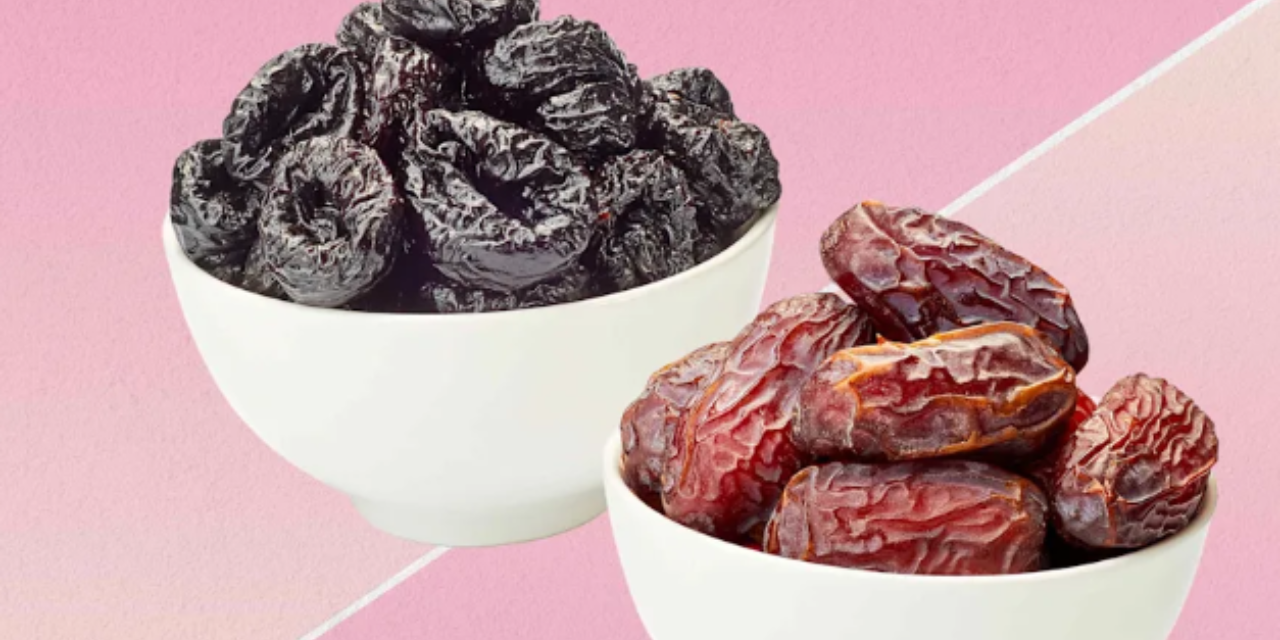
Prunes and dates are two popular dried fruits that offer a convenient way to increase daily fibre intake while providing essential nutrients and natural sweetness. Both support digestive health, but they offer slightly different nutritional benefits, making each a valuable addition to a balanced diet.
According to dietitians, both fruits provide approximately 3 grams of dietary fibre per 50-gram serving. Medjool dates contain slightly more fibre than prunes, although the difference is minimal. Therefore, neither fruit is significantly better than the other when it comes to overall fibre content.
Prunes for Digestive Health
Prunes are particularly recognised for their digestive health benefits. Five prunes, weighing approximately 50 grams, provide around 3 grams of dietary fibre, equivalent to 11% of the daily value.
Their benefits extend beyond fibre content. Prunes contain sorbitol, a naturally occurring sugar alcohol that helps draw water into the intestines and soften stools, supporting bowel regularity and helping relieve constipation.
They also provide antioxidants and important nutrients, including boron and copper, which contribute to overall health.
Dates for Fibre and Essential Nutrients
Dates, particularly Medjool dates, provide approximately 3 grams of fibre per 50-gram serving. Their natural sweetness and soft texture make them a popular snack and ingredient in various recipes.
In addition to fibre, dates contain essential minerals such as potassium, magnesium and copper, along with polyphenols and other beneficial plant compounds. These nutrients may support digestive and cardiovascular health.
Which Is the Better Choice?
When comparing fibre content, prunes and dates are almost equal. However, prunes may be a better option for people looking to improve bowel regularity because of their combination of fibre and sorbitol.
Dates offer a naturally sweet alternative with valuable minerals and antioxidants. Ultimately, the choice depends on individual nutritional needs and taste preferences.
Tips for Including Prunes and Dates in Your Diet
Both dried fruits can be incorporated into everyday meals and snacks. Dietitians recommend pairing them with nuts, seeds or unsweetened Greek yoghurt to add protein and healthy fats.
They can also be included in smoothies, desserts, breakfast dishes and post-workout snacks to provide natural sweetness and carbohydrates.
Adding a variety of fibre-rich foods to the diet can help support digestive health, improve nutritional balance and increase daily fibre consumption.


No comments yet. Be the first to share your thoughts!