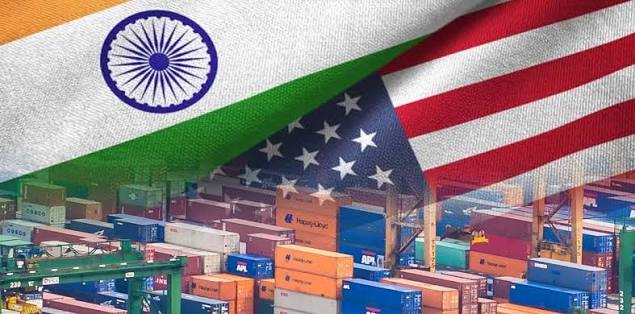
The Indo-US trade deal is facing delays as negotiations remain in their final stages without a firm timeline for an announcement. US Trade Representative Jamieson Greer said the talks are in the “short strokes”, but a deal is not imminent.
India’s Finance Minister Nirmala Sitharaman has also said that the trade discussions have reached a plateau. The comments have raised doubts over earlier expectations that the agreement was close to completion.
US Tariffs Complicate Trade Talks
The Indo-US trade deal faces a difficult environment because of uncertainty over US tariffs. Washington has raised concerns about market access, trade imbalances and other issues.
India wants a balanced agreement that can protect its exporters from sudden US tariff measures. New US tariffs on solar cells and modules have added to concerns. Proposed tariffs on generic medicines have also increased uncertainty for Indian businesses.
India has offered to reduce duties on several US industrial and agricultural products. However, it continues to maintain key red lines, including restrictions related to genetically modified crops and dairy products.
India Addresses US Trade Imbalance Concerns
India has also taken steps to address concerns over the bilateral trade deficit. Its trade surplus with the US has declined significantly.
India’s bilateral trade surplus fell 42% year-on-year between September 2025 and February 2026, when US tariffs were in place. During April-August 2026, the surplus declined 21% year-on-year to $14.7 billion.
Despite this decline, the US continues to seek measures to reduce the trade imbalance. Washington is reportedly seeking greater purchases of American energy, technology and other products, along with increased investment in the US.
India Looks to Diversify Trade Partnerships
With the Indo-US trade deal negotiations facing an impasse, India is expected to continue discussions while expanding trade ties with other countries.
India is working to advance trade agreements with the European Union and Canada. It is also looking to strengthen relationships with other developed economies and emerging markets.
Trade diversification could help India reduce its dependence on individual markets and create new opportunities for exporters.
For now, the Indo-US trade deal remains a work in progress. Both sides will need to bridge differences on tariffs, market access and trade imbalances before an agreement can be concluded.


No comments yet. Be the first to share your thoughts!